Property records contain essential details about ownership, parcel numbers, property addresses, building characteristics, and assessed values. However, incorrect or outdated information can create problems for homeowners, buyers, and sellers in Lorain County, Ohio. These errors may affect property tax assessments, official notices, and real estate transactions.
Whether you recently purchased a property or have owned one for years, checking your records is important. This guide explains 10 common property record mistakes, why they happen, and how to get them corrected.
How to Check Your Lorain County Property Records
Before requesting a correction, locate your property in the county’s property search system. You can search using your property address, owner’s name, or parcel number, depending on the available search options.
Review the following details carefully:
- Property owner’s name: Check whether the listed ownership information is accurate and current.
- Parcel number: Confirm that the record belongs to the correct property.
- Property address: Verify the street address and other identifying details.
- Legal description: Compare the recorded description with your property documents.
- Property characteristics: Review building size, land acreage, property type, and recorded improvements.
- Market and assessed values: Check the values used for property taxation.
- Tax information: Review available property tax details and applicable credits or exemptions.
Compare the online information with your deed, survey, tax documents, and other property records. If you identify a discrepancy, determine which county office maintains the information before submitting a correction request.
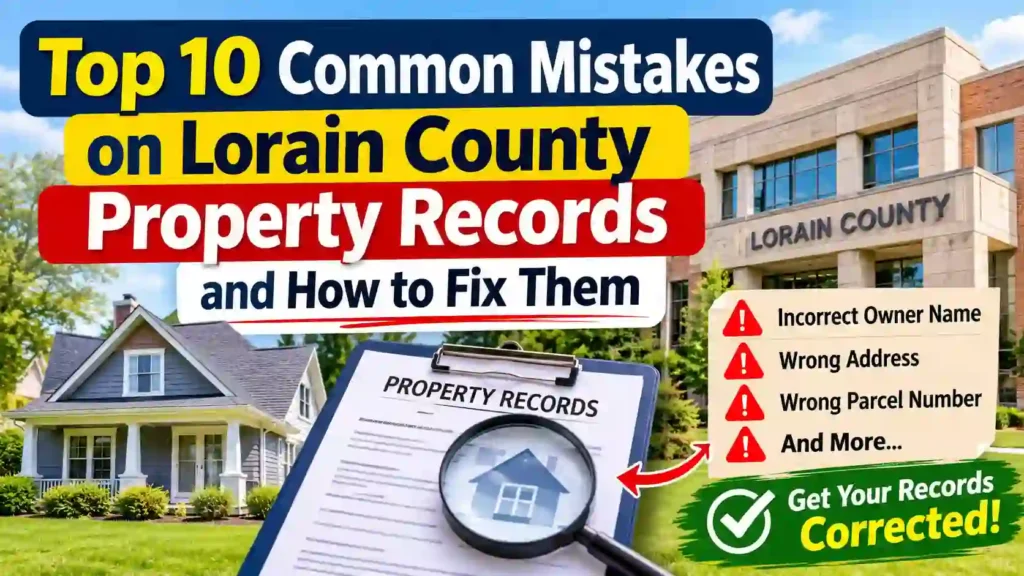
Top 10 Common Mistakes on Lorain County Property Records
Property record errors can occur because of outdated information, data entry mistakes, changes in ownership, or differences between recorded documents and property details. The following are common issues worth checking when reviewing your property information.
1. Incorrect Property Owner Name
An incorrect or outdated owner’s name is one of the first things to check in a property record. This can happen after a property sale, inheritance, marriage, divorce, or legal name change.
For example, a property record may still display a previous owner’s name even after a recent transaction.
How to fix it:
- Check the ownership information against your recorded deed.
- Confirm that the property transfer was properly submitted and recorded.
- If the deed is recorded but the Auditor’s ownership information has not been updated, contact the Auditor’s Real Estate Division.
- If the deed itself contains an error, consult a real estate attorney about the appropriate correction.
The Lorain County Recorder maintains recorded deeds and other documents establishing property ownership. The Recorder cannot independently alter an existing deed.
2. Outdated Property Mailing Address
A property’s physical location and the owner’s mailing address serve different purposes. The physical address identifies where the property is located, while the mailing address determines where property-related correspondence may be sent.
Problems can occur when an owner moves, purchases another property, or forgets to update their mailing information. As a result, important tax notices and other correspondence may go to an old address.
How to fix it:
- Review the mailing address displayed in your property record.
- Compare it with your current mailing address.
- Contact the Lorain County Auditor’s office to ask about updating the owner’s mailing information.
- Check the updated record afterward to confirm that the change appears correctly.
Keeping your mailing address current can help prevent missed property tax notices and other important correspondence.
3. Incorrect or Confusing Parcel Number
A parcel number is a unique identifier used to distinguish one property from another in county records. It helps property owners, buyers, and county offices locate the correct property information.
A mistake involving a parcel number can cause someone to review the wrong property, misunderstand a tax record, or provide incorrect information when contacting a county department.
How to fix it:
- Check the parcel number on your property tax bill or other official property documents.
- Compare it with the number displayed in the Lorain County property search system.
- Make sure you are reviewing the correct parcel, especially if you own multiple properties.
- Contact the Auditor’s office if the parcel number appears inconsistent with the official records.
Do not assume that two nearby properties have the same parcel number or belong to the same ownership record. Always verify the parcel number before requesting a correction.
4. Incorrect Property Address
Property records may sometimes display an incorrect street number, street name, spelling, or unit number. These issues can result from address changes, data entry mistakes, or differences between older records and current addressing information.
An incorrect address can make it harder to identify a property, locate it in online search results, or match it with other documents.
How to fix it:
- Compare the listed address with your utility bills, purchase documents, and other reliable records.
- Check whether the issue involves the physical property address or the owner’s mailing address.
- Contact the appropriate county or local addressing department to verify the correct physical address.
- Ask the Auditor’s office how to update its property record after the address has been verified.
- If the address is correct in local addressing records but incorrect in the Auditor’s database, provide supporting documentation when requesting an update.
5. Incorrect Property Size or Lot Dimensions
Property records may contain information about land acreage, lot dimensions, and legal descriptions. Errors or discrepancies can occur when older descriptions are used, parcels are divided, or property boundaries change.
For example, an owner may notice that the acreage displayed online does not match the acreage stated in a survey or deed.
How to fix it:
- Compare the recorded acreage with your deed and available survey documents.
- Review the legal description to make sure it refers to the correct parcel.
- Contact the Lorain County Auditor’s Tax Map Department if the parcel description or mapping information appears incorrect.
- Provide supporting documents, such as a recorded deed or professional survey, when requesting a review.
Important: Online parcel maps are useful for identifying properties, but they should not be treated as definitive legal boundary surveys. If you have a boundary dispute or need precise measurements, consult a licensed surveyor.
6. Incorrect Building Details or Property Characteristics
A property record may include details about the building’s size, construction, use, and other characteristics. These details help support the county’s property valuation and assessment process.
Common discrepancies include:
- Incorrect building square footage.
- Wrong property or building classification.
- Incorrect number of stories.
- Outdated construction details.
- Incorrect descriptions of building features.
These mistakes may occur when property information is not updated after renovations, additions, or changes to the building.
How to fix it:
- Review the building characteristics listed in your property record.
- Compare the information with actual property conditions and available construction documents.
- Gather supporting evidence, such as building plans, permits, or measurements.
- Contact the Lorain County Auditor’s appraisal department and request a review of the disputed information.
- If the county confirms that a property characteristic is incorrect, ask what documentation is needed to update the record.
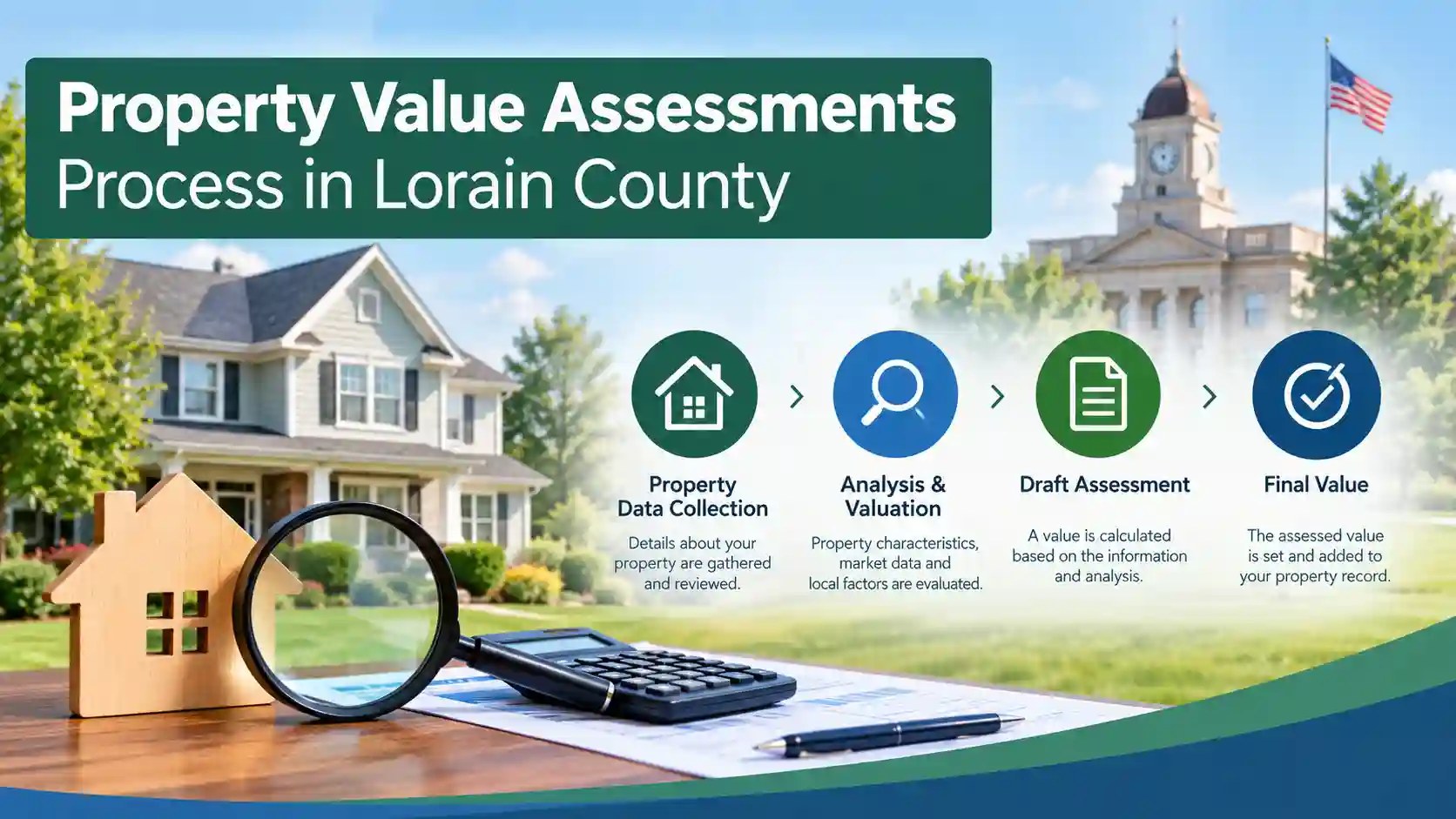
7. Incorrect Property Market or Assessed Value
Property owners sometimes find that their property’s market or assessed value does not match their expectations. This may happen because of changing market conditions, incorrect property characteristics, or differences between an owner’s estimate and the county’s valuation.
It is important to understand the difference between these two values:
- Market Value: The estimated value of a property based on market conditions.
- Assessed Value: The value used to calculate property taxes. In Ohio, real property is generally assessed at 35% of market value.
For example, a property with a market value of $200,000 would generally have an assessed value of $70,000 before applicable adjustments.
How to fix it:
- Review your property’s current market and assessed values.
- Check whether the building details and other property characteristics are accurate.
- Gather evidence supporting your opinion of the property’s market value, such as comparable property sales or a professional appraisal.
- Contact the Lorain County Auditor’s office to understand the available review and appeal options.
If you formally disagree with the valuation, you may be able to file a complaint with the Lorain County Board of Revision using DTE Form 1. The filing must meet the applicable deadline and requirements.
8. Missing or Incorrect Property Improvements
Property improvements can include garages, additional rooms, finished basements, extensions, and other structures or features. If these improvements are missing or incorrectly described in county records, the property information may not accurately reflect its current condition.
This issue can arise when renovations are completed, building information is not updated, or previous improvements are recorded incorrectly.
How to fix it:
- Compare the improvements listed in your property record with the actual building.
- Check available building permits, construction plans, and contractor documents.
- Make a list of missing or incorrectly described improvements.
- Contact the Auditor’s appraisal department and request a review.
- Provide supporting documentation if requested.
Remember that not every improvement automatically results in a particular change in property value. The Auditor’s office determines how property characteristics affect the official assessment.
9. Incorrect Property Classification or Tax Exemptions
Property classification and applicable tax credits or exemptions can affect how property information is assessed and how much tax an eligible owner may owe.
Problems may occur when a property is assigned an incorrect classification or an eligible exemption is missing from the record.
Some examples include:
- Incorrect residential or commercial property classification.
- Missing owner-occupancy credit.
- Missing homestead exemption for an eligible property owner.
- Incorrect agricultural property classification.
- Outdated eligibility information.
How to fix it:
- Review the property classification and applicable credits or exemptions.
- Check whether you meet the eligibility requirements for the relevant program.
- Contact the Lorain County Auditor’s office to identify the correct application or review process.
- Submit the required forms and supporting documents.
- Follow up to confirm whether the information has been updated.
If you believe a property classification or exemption determination is incorrect, ask the Auditor’s office whether a Board of Revision complaint or another review procedure applies.
10. Outdated or Incorrect Property Transfer History
Property transfer history provides information about previous ownership changes and recorded real estate transactions. Errors or missing information may create confusion when researching a property’s ownership history.
For example, a recent purchase may not appear in the expected sequence, or a property record may not match the information shown in the recorded deed.
How to fix it:
- Review the property’s transfer information in the county records.
- Search the Lorain County Recorder’s database for the relevant deed.
- Compare the recorded document with the information displayed in the Auditor’s property record.
- If the deed has been recorded but the Auditor’s information appears outdated, contact the Auditor’s Real Estate Division.
- If the recorded deed itself contains an error, consult a qualified real estate attorney about correcting the document.
The Recorder maintains official recorded real estate documents, while the Auditor handles property appraisal, assessment, and related tax records. These offices have different responsibilities.
How to Correct Errors on Lorain County Property Records
Once you identify an error, the next step is to determine which office maintains the information and what documents are needed to support a correction.
Follow these steps to make the process easier.
Step 1: Locate Your Property Record
Start by finding your property through the Lorain County property search system. You can use identifying details such as the property address, owner’s name, or parcel number.
Make sure you have selected the correct property before reviewing its information.
Step 2: Identify the Incorrect Information
Carefully review the property record and write down the details that appear incorrect or outdated.
These may include the owner’s name, mailing address, property characteristics, parcel information, or assessed value.
Step 3: Gather Supporting Documents
Collect documents that help establish the correct information. Depending on the issue, these may include:
- Recorded property deed.
- Property survey.
- Property tax bill.
- Building permits or construction documents.
- Professional appraisal.
- Relevant ownership or legal documents.
Providing supporting evidence can help the appropriate department understand the issue.
Step 4: Contact the Appropriate County Office
Not every property record issue is handled by the same department. Contact the Auditor, Recorder, Treasurer, or another relevant office based on the type of error.
Explain what information appears incorrect and ask about the proper correction procedure.
Step 5: Submit the Required Request or Documentation
Follow the instructions provided by the county office. Some corrections may require supporting documents, specific forms, or additional verification.
For legal deed corrections, consult an attorney rather than assuming the Recorder can edit an existing document.
Step 6: Follow Up on Your Request
After submitting your information, keep copies of your documents and any correspondence with the county office.
Follow up if you do not receive an update within the expected timeframe. Once the correction is processed, review the property record again to verify that the information is accurate.
Note: The correction process and processing time depend on the type of error. A simple clerical correction may require a different procedure from a property valuation appeal or legal deed correction.
Which Lorain County Office Should You Contact for Property Record Errors?
Choosing the correct office can save time when trying to resolve a property record issue. Different departments maintain different types of property information.
| Type of Issue | Appropriate Office |
|---|---|
| Property ownership and recorded deeds | Lorain County Recorder |
| Property valuation and assessment | Lorain County Auditor |
| Property characteristics and parcel information | Lorain County Auditor |
| Property tax payments and balances | Lorain County Treasurer |
| Legal property boundary disputes | Licensed surveyor or legal professional |
| Property address discrepancies | Appropriate local addressing department |
Here are the main county office contact details:
Lorain County Auditor
- Address: 226 Middle Avenue, Room 200, Elyria, OH 44035
- Phone: 440-329-5207
- Website: Lorain County Auditor
Lorain County Recorder
- Address: 226 Middle Avenue, Room 102, Elyria, OH 44035
- Phone: 440-329-5148
- Website: Lorain County Recorder
The Recorder handles official recorded property documents, while the Auditor maintains appraisal, assessment, and related property information.
How to Avoid Common Property Record Mistakes
Regularly reviewing your property information can help you identify discrepancies before they create problems. Consider following these practices:
- Review your records periodically: Check your property information to identify outdated or incorrect details.
- Verify ownership after a transfer: Review the recorded deed and confirm that the ownership information has been updated.
- Keep your mailing address current: Notify the appropriate county office whenever your mailing information changes.
- Check property details after renovations: Review building characteristics after completing major additions or improvements.
- Review property valuations: Examine assessment information and valuation notices when they become available.
- Keep important documents: Maintain copies of deeds, surveys, tax bills, permits, and other property-related paperwork.
- Check applicable tax credits: Review your eligibility for property tax reductions, exemptions, and other applicable programs.
Taking these precautions can help you maintain accurate property information and address potential problems before they affect a real estate transaction or property tax assessment.
Frequently Asked Questions
Q: How do I check my property records in Lorain County, Ohio?
You can check your property information through the Lorain County property search system. Search using your property address, owner’s name, or parcel number to review available ownership, valuation, building, and tax details.
Q: How can I correct incorrect information on my Lorain County property record?
First, identify the incorrect information and gather supporting documents. Then contact the appropriate county office, such as the Auditor or Recorder, to ask about the correction process. Submit any required documentation and follow up to verify the update.
Q: What should I do if my name is incorrect on property records?
Check your recorded deed to verify the ownership information. If the deed is correct but the Auditor’s property record displays an outdated name, contact the Auditor’s Real Estate Division. If the deed itself contains an error, consult a real estate attorney.
Q: Can incorrect property information affect my property taxes?
Yes, incorrect property characteristics, valuations, classifications, or exemption information may affect property tax assessments or applicable credits. Review the information and contact the Auditor’s office if you identify a discrepancy.
Q: How long does it take to correct property records in Lorain County?
The processing time depends on the type of correction, supporting documents, and the county department handling the request. Contact the appropriate office for an estimated timeframe.
Q: What happens if my property acreage is incorrect?
Compare the recorded acreage with your deed and survey documents. If the information does not match, contact the Auditor’s Tax Map Department and provide supporting documentation. A licensed surveyor may be necessary if the issue involves disputed property boundaries.
Q: Can I dispute an incorrect property valuation in Lorain County?
Yes, property owners may file a complaint with the Lorain County Board of Revision if they disagree with their property’s valuation. The process generally requires DTE Form 1, supporting evidence, and compliance with the applicable filing deadline.
Q: Does the Lorain County Auditor handle property deed corrections?
No, the Auditor does not prepare or legally correct property deeds. The Lorain County Recorder maintains recorded deeds, but it cannot alter an existing deed. Property owners should consult a real estate attorney about correcting legal documents.
Keep Your Lorain County Property Information Accurate
Accurate property information can make a difference when selling a home, refinancing a mortgage, reviewing tax assessments, or handling ownership-related matters. If something in your record does not match your documents, address it with the appropriate county office rather than allowing the discrepancy to remain unresolved.
Keeping your property documents organized and checking official records when important changes occur can help you avoid unnecessary complications and make future property-related decisions with greater confidence.