
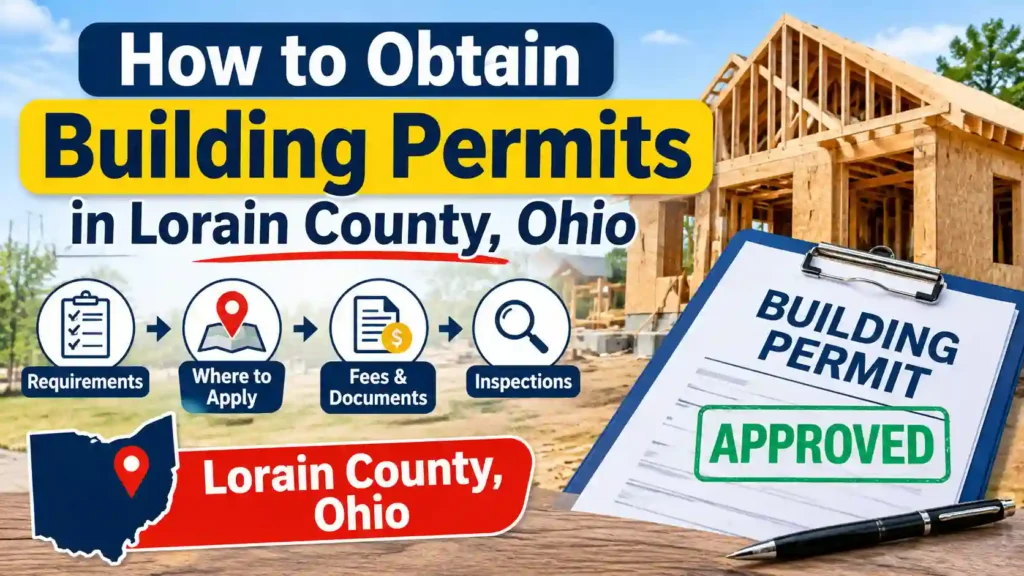
Most construction projects in Lorain County, Ohio, from new homes to backyard sheds, require building permits from the appropriate city, township, or county building department before work begins. Because Ohio splits permitting authority between certified local departments and the state, knowing which office handles your project saves time and avoids stop-work orders.
This guide covers when building permits are required, where to apply, what documents you need, and how inspections and final approval work. Explore more property guides with our Lorain County Auditor homepage.
When Do You Need a Building Permit in Lorain County?
You need a permit for almost any project that changes a structure’s size, use, or core systems, including new construction, additions, and work on electrical, plumbing, or mechanical systems. Minor repairs and cosmetic updates are usually exempt, but confirming with your local building department prevents costly mistakes.
Residential Construction and Home Improvements
- New home construction: Requires a full building permit along with electrical, plumbing, and mechanical permits before any work starts.
- Home additions and structural alterations: Any addition or change to the structure’s footprint or framing needs a permit.
- Garages, decks, and accessory structures: Detached garages, decks above a certain height, and similar structures typically require a permit and, in many cases, zoning approval.
Check our Lorain County Zoning Maps and Regulations guide to understand local zoning rules and property restrictions before starting construction.
Commercial and Industrial Construction
- New commercial buildings: Require full plan review and permits before construction begins.
- Commercial renovations and expansions: Interior and exterior changes to commercial space generally need a permit, especially work affecting structural or life-safety systems.
- Industrial construction projects: Subject to the Ohio Building Code and often additional review for occupancy type and use.
Electrical, Plumbing, and Mechanical Work
- Electrical installations and upgrades: New circuits, panel upgrades, and rewiring projects require an electrical permit.
- Plumbing system modifications: New fixtures, repiping, and water or sewer line work typically need a plumbing permit.
- HVAC installations and replacements: Installing or replacing furnaces, air conditioning units, or ductwork generally requires a mechanical permit.
Projects That May Not Require a Building Permit
Common exemptions include minor repairs, cosmetic work, and small detached structures below a certain size, though exact thresholds vary by jurisdiction.
Painting, flooring, and like-for-like fixture replacement are typically exempt, along with routine maintenance that does not alter the structure or its systems.
Since exemption thresholds differ between cities, villages, and townships, always verify with your local building department before skipping a permit.
Where to Apply for a Building Permit in Lorain County
Where you apply depends on whether your property sits in an incorporated city or village, or in an unincorporated township. Ohio law allows each jurisdiction to decide whether to operate its own certified building department.
Building Permits in Cities and Villages
Most incorporated cities and villages in Lorain County, including the City of Lorain, operate their own certified building departments and issue permits directly for residential and commercial work.
The City of Lorain’s Building, Housing and Planning Department Building Division handles permits at 200 West Erie Avenue, 5th Floor, Lorain, Ohio 44052.
Call or visit your city or village building department directly rather than the county office, since most cities post permit applications, fee schedules, and requirements on their official websites.
Building Permits in Unincorporated Townships
Unincorporated townships rely on the certified building department that serves their area, which may be the Lorain County Building Department or a neighboring certified jurisdiction under contract.
Contact the township trustees or the Lorain County Building Department to confirm which office has jurisdiction, since a certified department enforces the Ohio Building Code and Residential Code of Ohio within its area. If no local department is certified for a given project type, the state handles commercial permitting instead.
Lorain County and Ohio Building Permit Resources
For unincorporated areas, the Lorain County Building Department issues permits and performs inspections, while the Lorain County Community Development office can direct property owners to the correct permitting authority for their location.
If a project falls outside local certification, the Ohio Department of Commerce, Division of Industrial Compliance, through the Ohio Board of Building Standards, becomes the permitting authority for commercial construction statewide. When in doubt, start with your city, village, or township office, since they can point you to the right department.
Documents Required to Apply for a Building Permit
Every application needs accurate property information along with construction plans appropriate to the project’s scope. Incomplete applications are the most common cause of delays.
For the required application forms, visit our Lorain County Forms and Guides page.
Property and Applicant Information
- Property address and parcel number: Confirm both match current Lorain County Auditor records before submitting.
- Property owner and contractor details: Include names, addresses, and license numbers where applicable.
- Project description and estimated construction value: Most departments calculate permit fees based on the project’s estimated cost.
Construction Plans and Supporting Documents
- Site plans and property layouts: Show the location of the proposed work relative to property lines and existing structures.
- Architectural and structural drawings: Required for most new construction and significant additions.
- Electrical, plumbing, and mechanical plans: Needed when the project includes work on these systems.
- Engineering documents and additional approvals: Larger or complex projects may require a licensed engineer’s stamp or additional agency sign-off.
How to Apply for a Building Permit in Lorain County
Applying for a building permit follows the same general sequence across Lorain County, whether you work with a city, village, township, or the state. Following each step in order keeps your application moving and avoids unnecessary delays.
Step 1: Identify Your Property’s Jurisdiction
Determine whether your property is in an incorporated city or village with its own building department, or in a township served by the county or a certified neighboring department.
Step 2: Contact the Appropriate Building Department
Reach out to that office to confirm permit requirements, fee schedules, and the documents needed for your specific project.
Step 3: Complete the Permit Application and Prepare Documents
Fill out the application accurately and gather all required plans, property details, and contractor information before submitting.
Step 4: Submit Your Application and Construction Plans
Submit the completed application along with plans and supporting documents to the building department, either in person or through an online portal where available.
Step 5: Complete Plan Review and Pay Required Fees
The department reviews your plans for code compliance and notifies you of any required corrections, after which you pay the applicable permit fees.
Step 6: Receive Your Building Permit Approval
Once plans are approved and fees are paid, the department issues your building permit, allowing construction to begin.
Building Permit Fees and Approval Time in Lorain County
Permit costs and approval timelines in Lorain County depend on the issuing department, the project’s scope, and how complete your application is. Budgeting for both the fee and a realistic timeline helps avoid surprises once construction is ready to begin.
How Much Does a Building Permit Cost?
Permit fees in Lorain County typically range from under $100 for small projects to several hundred dollars or more for new construction, depending on the department and project scope. Commercial projects generally carry higher fees than residential ones due to their larger scope and additional plan review.
Most departments calculate fees as a percentage of the project’s declared value or by a set schedule based on square footage, and complex projects requiring engineering review or multiple trade permits may incur extra charges.
How Long Does Building Permit Approval Take?
Simple residential permits are often approved within about two weeks, while larger or more complex projects can take longer. A complete, accurate application moves through review faster than one requiring follow-up, and new construction or commercial projects typically require more extensive plan review than simple residential work. If the department requests corrections, resubmitting promptly keeps your timeline on track.
Building Inspections and Final Approval
A permit only authorizes the work, it does not confirm it was done correctly, so the building department verifies the project through a series of required inspections. Passing each inspection in sequence is what ultimately leads to final approval and, where applicable, a certificate of occupancy.
Required Building Inspections During Construction
Most projects require a series of inspections at key construction stages to confirm the work meets code before it is covered or completed.
- Foundation and footing inspections: Conducted before concrete is poured to verify depth and reinforcement.
- Framing inspections: Completed after framing is up but before walls are closed.
- Electrical, plumbing, and mechanical inspections: Required at rough-in and again after systems are finished.
- Final building inspection: Confirms the completed project meets all applicable codes.
How to Schedule a Building Inspection
- Contact the issuing building department: Most departments schedule inspections by phone or through an online portal.
- Provide permit and property details: Have your permit number and address ready when scheduling.
- Follow inspection scheduling instructions: Some departments require 24 to 48 hours notice before an inspection.
What Happens If an Inspection Fails?
- Review the inspector’s corrections: The inspector provides a written list of items that do not meet code.
- Complete required modifications: Make the necessary corrections before requesting another inspection.
- Schedule a reinspection: Contact the building department once corrections are complete to schedule a follow-up visit.
Final Approval and Certificate of Occupancy
Once the final inspection confirms the project is complete and code compliant, the building department closes out the permit. Keep copies of all inspection approvals and the final permit for your records, since new construction and many commercial projects also require a certificate of occupancy before the space can be legally occupied.
What Happens If You Build Without a Required Permit?
Building without a required permit can lead to serious consequences that cost far more than the permit itself.
- Stop-work orders: The building department can halt construction immediately until a permit is obtained.
- Additional fees and penalties: Many jurisdictions charge double fees or fines for unpermitted work discovered after the fact.
- Required corrections or removal of unauthorized work: Work that does not meet code may need to be altered, exposed for inspection, or removed entirely.
- Delays in project approval: Resolving unpermitted work adds significant time before a project can move forward.
- Potential complications when selling the property: Unpermitted work often surfaces during a home inspection or title search and can delay or derail a sale.
Frequently Asked Questions (FAQs)
Q: Do I need a building permit to replace a roof in Lorain County, Ohio?
Requirements depend on local rules and the work involved. Replacing roofing materials may be exempt, but structural repairs or alterations may require a permit. Confirm with your building department before starting.
Q: Do I need a zoning permit in addition to a building permit in Lorain County?
Possibly. Building permits address construction codes, while zoning approval covers land use, setbacks, height limits, and property restrictions. Some projects require both.
Q: Can a homeowner apply for their own building permit in Lorain County?
Yes, in many cases. However, eligibility depends on the project and local rules. Electrical, plumbing, and HVAC work may have additional requirements.
Q: How long is a building permit valid in Lorain County, Ohio?
Validity periods vary by building department. Permits may expire if work does not begin or stops for too long. Check the expiration and extension rules with the issuing office.
Q: Can I make changes to my construction plans after a building permit is approved?
Yes, but significant changes may require revised plans and approval before the modified work begins. Contact the issuing department first.
Q: Can I sell a house with an open building permit in Lorain County?
Yes, but unfinished inspections or unresolved permits can complicate a sale. Contact the issuing department to resolve outstanding requirements.
Q: How can I check whether a property has outstanding building permits in Lorain County?
Contact the responsible building department with the property address and parcel number. Ask about open permits, pending inspections, and unresolved violations.
Final Thoughts
Obtaining a building permit in Lorain County starts with identifying the correct building department for your property’s location. Permit requirements, fees, approval times, and inspection procedures can vary between jurisdictions, so confirm the current rules before beginning construction.
Keep your approved plans, permit documents, and inspection records throughout the project. Securing the required approvals before work starts and completing every required inspection can help prevent costly delays, penalties, and problems when selling or occupying the property.